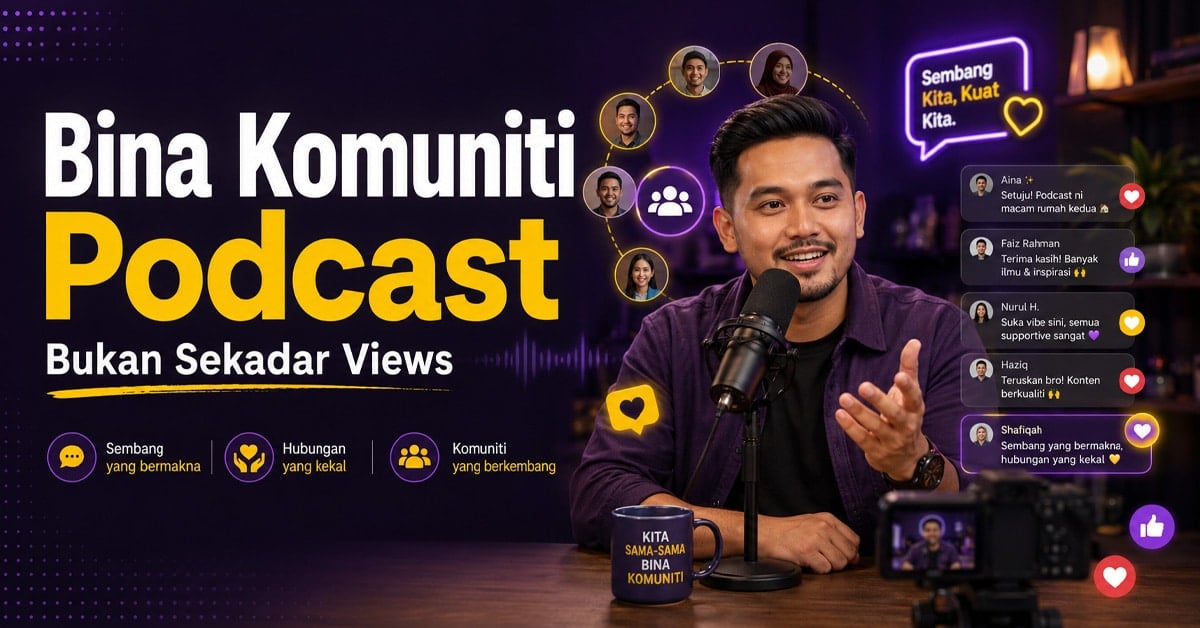
Internal podcasts in Malaysia are becoming more relevant in 2026 because companies need better ways to communicate with employees, share knowledge, onboard new team members, and keep company culture alive.
For many Malaysian companies, internal communication is no longer as simple as sending one long email or calling everyone into a meeting. Teams are busy, departments are spread out, hybrid work is normal, and employees are already overloaded with messages, chats, decks, and updates.
This is why internal podcasts are starting to make sense. Instead of forcing every update into a memo, companies can use podcast-style content to share leadership messages, training, onboarding stories, culture updates, and internal knowledge in a more human and flexible way.
In this article, we will break down why Malaysian companies are starting internal podcasts in 2026, how internal podcasts work, and how businesses can use them for communication, training, employer branding, and culture.
Want to understand the bigger podcast growth trend?
Read this article too: Podcasts Growth in 2026: Do Podcasts Still Grow and What Actually Works Now
Quick Answer: Why Are Malaysian Companies Starting Internal Podcasts?
Malaysian companies are starting internal podcasts because they help make company communication more personal, flexible, and easier to consume.
Internal podcasts can be used for leadership updates, onboarding, staff training, culture building, employer branding, internal storytelling, and knowledge sharing — without forcing employees to attend another long meeting or read another long PDF.
What Is an Internal Podcast?
An internal podcast is a podcast created for people inside a company. Unlike public branded podcasts, internal podcasts are usually meant for employees, managers, departments, new joiners, or internal stakeholders.
Some internal podcasts are private and only shared with staff. Others may be semi-public, especially if the company wants to use selected episodes for employer branding, recruitment, or thought leadership.
The format can be simple. It can be audio-only, video podcast, leadership interview, department update, training episode, onboarding series, or a short internal show recorded monthly.
Examples of Internal Podcast Formats
- Leadership update: A monthly message from the CEO or management team.
- Onboarding podcast: Episodes for new employees to understand company culture, values, and workflow.
- Training podcast: Short learning episodes for sales, operations, HR, compliance, or customer service.
- Employee stories: Conversations with team members about career growth, projects, and lessons learned.
- Culture podcast: Episodes about company values, internal initiatives, and team achievements.
Why Internal Podcasts Matter in 2026
Work has changed. Employees are dealing with more messages, more tools, more meetings, and more information than before. For many companies, the issue is not a lack of communication. The issue is that communication is too scattered.
Microsoft’s Work Trend Index highlights the pressure created by modern work patterns and the need for organizations to rethink how people work and communicate. In Malaysia, Microsoft’s 2025 Work Trend Index also highlighted how employees are turning to AI for speed, availability, and support, showing that workplace expectations are changing fast.
At the same time, Gallup’s State of the Global Workplace 2026 reported that global employee engagement dropped to 20% in 2025. This makes internal communication even more important, because disengaged employees are harder to align, motivate, and retain.
Internal podcasts will not solve every workplace problem. But they can become one useful format for making communication more human, repeatable, and easier to consume.
1. Internal Podcasts Make Leadership Communication More Human
Leadership communication can easily feel too formal. Emails, slides, and official statements are useful, but they do not always carry tone, emotion, or context.
An internal podcast allows leaders to explain decisions in their own voice. Employees can hear the reasoning behind changes, the direction of the company, and the human side of leadership.
This is especially useful during growth, restructuring, new initiatives, company expansion, or major changes in direction.
Leadership Podcast Topics
- Monthly CEO updates.
- Quarterly business direction.
- Company wins and lessons learned.
- Explanation of new strategy or internal policy.
- Q&A with leadership.
- Reflections after major company milestones.
When employees hear leaders speak naturally, the message can feel more direct and more personal than a long internal memo.
2. Internal Podcasts Help With Onboarding New Employees
Onboarding is not just about giving new staff a handbook. New employees need to understand how the company thinks, how teams work, what the culture feels like, and what is expected from them.
An onboarding podcast can help new joiners learn at their own pace. They can listen while commuting, during quiet admin time, or before joining a new department.
Onboarding Podcast Episode Ideas
- Welcome message from the founder or CEO.
- Company history and mission.
- How each department works.
- Common mistakes new joiners should avoid.
- Culture, values, and communication style.
- Stories from employees who have grown inside the company.
This makes onboarding feel less like a one-time briefing and more like an ongoing learning experience.
3. Internal Podcasts Support Training and Knowledge Sharing
Many companies already have internal knowledge, but it is often trapped in meetings, documents, senior employees, or department silos.
Internal podcasts can help capture that knowledge in a format that is easier to revisit. Instead of repeating the same explanation again and again, companies can record training episodes that employees can access anytime.
Training Topics That Work Well as Internal Podcasts
- Sales training and objection handling.
- Customer service scenarios.
- Operational SOP explanations.
- HR policy explainers.
- Product knowledge updates.
- Compliance and safety reminders.
- Lessons from completed projects.
This does not replace hands-on training, but it supports learning by making information easier to repeat, revisit, and standardize.
4. Internal Podcasts Can Strengthen Company Culture
Company culture is not only built through posters, slogans, or annual dinners. It is built through repeated stories, behaviours, values, and shared understanding.
An internal podcast can help companies tell culture stories consistently. It gives space for employees to hear from colleagues in different departments, understand company values through real examples, and feel more connected to the bigger mission.
Culture Podcast Ideas
- Employee spotlight episodes.
- Behind-the-scenes project stories.
- Team wins and lessons learned.
- Values in action.
- Department introductions.
- Career growth stories inside the company.
For companies with multiple offices, branches, remote teams, or fast-growing departments, this can help reduce the feeling of disconnection.
5. Internal Podcasts Help Employer Branding
Not every internal podcast has to stay fully internal. Some episodes can be repurposed into employer branding content.
For example, a company can record employee stories, leadership conversations, team culture episodes, or career journey interviews. Selected clips can later be shared on LinkedIn, TikTok, Reels, YouTube Shorts, or the company career page.
This helps future talents understand the company beyond a job ad.
Employer Branding Content From Internal Podcasts
- Short clips about company culture.
- Employee career stories.
- Founder or leadership insights.
- Behind-the-scenes team moments.
- Recruitment campaign content.
- “Life at company” video snippets.
This is where internal podcasts connect strongly with marketing and HR. One recording can support both employee communication and recruitment visibility.
Want to understand corporate podcast strategy?
Read this article: Why Corporate Podcasts in Malaysia Are Growing
Internal Podcast vs Corporate Podcast: What Is the Difference?
Internal podcasts and corporate podcasts are related, but they are not exactly the same.
| Type | Main Audience | Main Purpose |
|---|---|---|
| Internal Podcast | Employees, managers, departments, internal stakeholders | Communication, training, onboarding, culture, internal alignment |
| Corporate Podcast | Customers, prospects, industry audience, public listeners | Brand trust, thought leadership, marketing, employer branding, public visibility |
A company can have both. For example, one podcast series may be private for staff training, while another public-facing series may be used for brand storytelling and thought leadership.
Internal Podcast Use Cases for Malaysian Companies
Internal podcasts can work for many types of companies in Malaysia, from SMEs to corporate teams, education providers, healthcare groups, financial institutions, agencies, startups, and professional service firms.
| Use Case | Who It Helps | Example Episode |
|---|---|---|
| Leadership Updates | All staff | “What We Are Focusing On This Quarter” |
| Onboarding | New employees | “How Our Company Works: A Guide for New Joiners” |
| Training | Sales, operations, HR, customer service | “Common Customer Questions and How to Answer Them” |
| Culture Building | Internal teams | “What Our Company Values Look Like in Real Work” |
| Employer Branding | Future talents and job candidates | “Career Growth Stories From Our Team” |
| Knowledge Sharing | Cross-department teams | “Lessons From Our Latest Project Launch” |
Why Audio and Video Work Better Than Long Internal Emails
Emails are still important, but they are not always the best format for every message.
Some messages need tone. Some need explanation. Some need emotion. Some need repetition. This is where audio and video can help.
When a leader explains a change through voice, employees can hear the tone behind the message. When a team member shares a story through video, other employees can see the person behind the work.
Internal Podcasts Are Useful Because They Are:
- Flexible: Employees can listen during commute, admin time, or breaks.
- Repeatable: The same message can be replayed by new staff later.
- Human: Voice and conversation carry tone better than text alone.
- Scalable: One recording can reach multiple branches or departments.
- Reusable: Episodes can become training materials, clips, recaps, and internal resources.
Internal podcasts should not replace all meetings or emails. But they can reduce repeated briefings and make important messages easier to revisit.
How to Start an Internal Podcast Without Overcomplicating It
The biggest mistake is trying to make the internal podcast too big from day one.
You do not need to launch a full media department. Start with one clear internal objective and one simple format.
Simple Internal Podcast Starter Plan
- Choose one objective: Leadership updates, onboarding, training, culture, or employer branding.
- Define the audience: All staff, new joiners, managers, sales team, branches, or departments.
- Pick a format: Solo update, interview, Q&A, panel, or short learning episode.
- Plan 6 episodes: Enough to test the format without overcommitting.
- Decide privacy: Private internal link, internal portal, unlisted video, private RSS, or selected public clips.
- Record consistently: Monthly or biweekly is usually more realistic for companies.
- Measure response: Completion rate, internal feedback, questions received, training usage, or staff engagement.
Start small, then improve the format based on how employees respond.
What Should an Internal Podcast Episode Include?
A good internal podcast episode does not need to be complicated. It just needs to be clear, useful, and easy to follow.
Simple Episode Structure
- Opening: Explain what the episode is about and why it matters.
- Main message: Share the update, story, training, or topic.
- Context: Explain the reason behind the message.
- Practical takeaway: What should employees understand or do?
- CTA: Where should employees go next, or who should they contact?
For internal communication, clarity matters more than entertainment. Keep it human, but do not overcomplicate the message.
Recommended Length and Frequency
Internal podcasts should respect employees’ time. They should be useful, not another burden.
| Format | Recommended Length | Suggested Frequency |
|---|---|---|
| Leadership Update | 10–20 minutes | Monthly |
| Training Episode | 5–15 minutes | As needed or by module |
| Employee Story | 15–30 minutes | Monthly or biweekly |
| Department Update | 10–20 minutes | Monthly |
| Culture / Employer Branding | 20–40 minutes | Monthly or campaign-based |
The best frequency is the one your team can sustain. A consistent monthly internal podcast is better than an ambitious weekly show that stops after two episodes.
How to Measure Internal Podcast Success
Internal podcasts should be measured based on their objective.
If the goal is onboarding, measure whether new staff use the episodes and whether onboarding questions reduce. If the goal is culture, measure internal feedback and participation. If the goal is training, measure completion and understanding.
Metrics to Track
- Number of plays or views.
- Completion rate or watch time.
- Staff feedback.
- Questions submitted after episodes.
- Training completion or quiz results.
- New joiner onboarding feedback.
- Internal engagement with clips or recap posts.
- Recruitment engagement if clips are used externally.
Do not measure everything at once. Choose metrics based on the purpose of the podcast.
Need a repeatable podcast workflow?
Read this guide: Workflow Podcast Untuk Beginner: Dari Idea Sampai Promosi
Checklist Before Starting an Internal Podcast
Before your company records the first episode, use this checklist:
- What is the main purpose of this internal podcast?
- Who is the exact internal audience?
- Will the podcast be audio-only, video, or both?
- Will it be private, public, or partly repurposed for employer branding?
- Who will host the podcast?
- Who needs to approve the message before publishing?
- How often can the team realistically record?
- Where will employees access the episodes?
- Will episodes be reused for training or onboarding?
- What metrics will define success?
If your company can answer these questions clearly, you are ready to design a simple internal podcast workflow.
Common Mistakes Companies Should Avoid
Internal podcasts work best when they feel useful and human. They become weak when they turn into long, scripted corporate announcements.
Avoid These Mistakes
- Making the episode too long without a clear structure.
- Using too much corporate jargon.
- Recording only when there is a crisis or major announcement.
- Forgetting to tell employees where to access the episodes.
- Not measuring whether employees actually listen or watch.
- Turning every episode into a one-way lecture.
- Trying to make it perfect instead of making it useful and consistent.
The best internal podcasts sound clear, honest, and useful. They do not need to sound like a press conference.
FAQ: Internal Podcasts in Malaysia
1. What is an internal podcast?
An internal podcast is a podcast created for employees or internal stakeholders. It can be used for company updates, onboarding, training, culture building, leadership communication, or knowledge sharing.
2. Do internal podcasts need to be private?
Not always. Some internal podcasts are fully private, especially if they include sensitive company information. Others may be partly repurposed into public employer branding content, such as short clips about culture or employee stories.
3. How long should an internal podcast episode be?
For most companies, 10 to 20 minutes is a good starting point for leadership updates or internal communication. Training episodes can be shorter, around 5 to 15 minutes, while employee stories may run longer if the conversation is valuable.
4. Who should host an internal podcast?
It depends on the objective. Leadership updates may be hosted by the CEO, founder, HR leader, or department head. Culture or employee stories can be hosted by HR, internal communications, marketing, or a confident team member with good communication skills.
5. Can KL Podcast Studio help companies record internal podcasts?
Yes. KL Podcast Studio can support companies with studio recording, camera setup, lighting, audio, and production workflow for internal podcasts, corporate podcasts, onboarding content, leadership messages, and employer branding content.
This allows your team to focus on the message while the technical setup is handled professionally.
Conclusion: Internal Podcasts Make Company Communication More Human
Malaysian companies are starting internal podcasts in 2026 because internal communication needs to become more flexible, more human, and easier to repeat.
Employees are already dealing with too many meetings, emails, chats, and updates. A well-planned internal podcast can help companies share leadership messages, train staff, onboard new joiners, preserve knowledge, and strengthen culture in a format that feels more natural.
The best internal podcasts are not complicated. They are clear, consistent, useful, and built around one real business need.
If your company wants to improve communication, training, culture, or employer branding, internal podcasting is a format worth exploring.
Ready to Start an Internal Podcast for Your Company?
Record your internal podcast at KL Podcast Studio and get a professional setup with camera, lighting, audio, and production support — so your team can focus on the message, not the technical shenanigans.